
4. Supporting sustainable enterprises: services to employers
- 4.1 How can PES best organise their internal resources to work with enterprises?
- 4.1.1 What is the importance of personal contact?
- 4.1.2 What do PES staff need to deal with employer and business membership organisations?
- 4.1.3 What skills are needed by PES staff who work with enterprises?
- 4.2.2.1 Manual uploading and posting of vacancies by PES staff may be suited in specific contexts
- 4.2.2.2 PES can support the automatic uploading and posting vacancies by some enterprises
A core feature of PES services is to collect vacancies from enterprises and for PES to facilitate good quality matches between jobseekers and enterprises. For enterprises, PES should be seen as the first stop to advertising vacancies and reaching a wide audience for free of charge. Across the region, this is often not the case. However, PES can work towards this by offering enterprises a wider set of support services that help enterprises to identify their skills needs and providing opportunities for their employees to upskill and reskill.
It is important to recognise that enterprises’ needs vary, and they are not a homogeneous group. They may have different needs, at diff erent times and these may be aff ected by their sector and location as well as the size of the enterprise. Enterprises often face multiple challenges and often they have very limited time available, particularly for small to medium enterprises (SMEs). This is important for PES to consider when choosing an appropriate communication method, and messages. Enterprises require carefully crafted messages that explain ‘What’s in it for me?’ as well as what actions they need to take.
An important aspect of communication with enterprises is customer service. This is key when working with enterprises as they may return to work with PES again in the future. Building lasting relationships with enterprises can take time as PES often need to overcome any negative perceptions that enterprises have of PES as well as creating mutual trust between PES staff and enterprises. Trust can be built on good results and performance therefore it is important that PES staff have enough time to get to know an enterprise, understand their recruitment and skills needs and suggest jobseekers that are a good fit.
PES therefore need to resource enterprise services appropriately and need to vary their approach and service offer to enterprises so that they can offer them relevant services and support. This in turn will provide a more eff ective and efficient service, raise the profile of PES services and lead to a better use of PES resources. The box below outlines some of the key partners whom PES can work with to do this.
Box 10. Key partners to work with for delivering services to enterprises
Employers’ organisations
- Chambers of commerce
- Trade / industrial associations (e.g., employer membership business organisations, EMBOs)
- Network organisations for SMEs
- Ministries, or regional / local government
- Media
The ILO1 considers employer and business membership organisations (EMBOs) as representing a key part in society: enterprises. Successful enterprises are at the heart of any strategy to create and increase employment and increase the quality of life and living standards as a whole. The ILO views EMBOs as playing an ’important role in enterprise success by infl uencing the environment in which they do business and by providing services that improve individual performances’.
Box 11. Creating collective solutions with EMBOs2
Global trends such as technological changes, climate changes and demographic changes (see Section 2.2 for more information) present diff erent challenges that cannot be addressed by business alone. Companies need to work together to develop solutions via EMBOs. EMBOs can strengthen to viability and competitiveness of individual businesses via addressing issues around skills (of their current and future workforce); infrastructure; and the business environment. They are often keen to play a much more active role in this process and work with external partners to do so, including the public and private sectors and EMBOs. As such, EMBOs can:
- Help to build more collaborative economies in which governments and companies work together to address the most pressing challenges, and the resulting benefits
- Support the coordination and advice around improving the skills of their workforce, via revised and enhanced training programmes
- Shape labour markets that are better equipped to deal with future changes, with proactive engagement between EMBOs and diff erent stakeholders. Communication and collaboration are required to promote trust and cooperation between business and wider society
- Adopt a long-term vision, based on strategic foresight, to help companies to be better equipped for change.
The table below provides an overview of the people, processes and services involved in delivering services for enterprises.
Table 4.1 Supporting sustainable enterprises: people, process and services
| People | Processes | Services |
| Employer-specialist staff, or dedicated units | Receiving and posting vacancies, including quality checking vacancies | Online vacancy platform |
| Middle-managers | Supporting development of job descriptions | Dedicated support services to assist matching |
| Collecting labour market information | Local/regional analysis and economic sector-based analysis | |
| Communication | Tailored local/regional updates and promotion | |
| Staff training | Customer support services |
This section will outline the key aspects of successful approaches to working with sustainable enterprises. This will look at internal PES resource issues, efficient ways of receiving and posting vacancies, managing labour market mismatches and how to strategically work with enterprises.
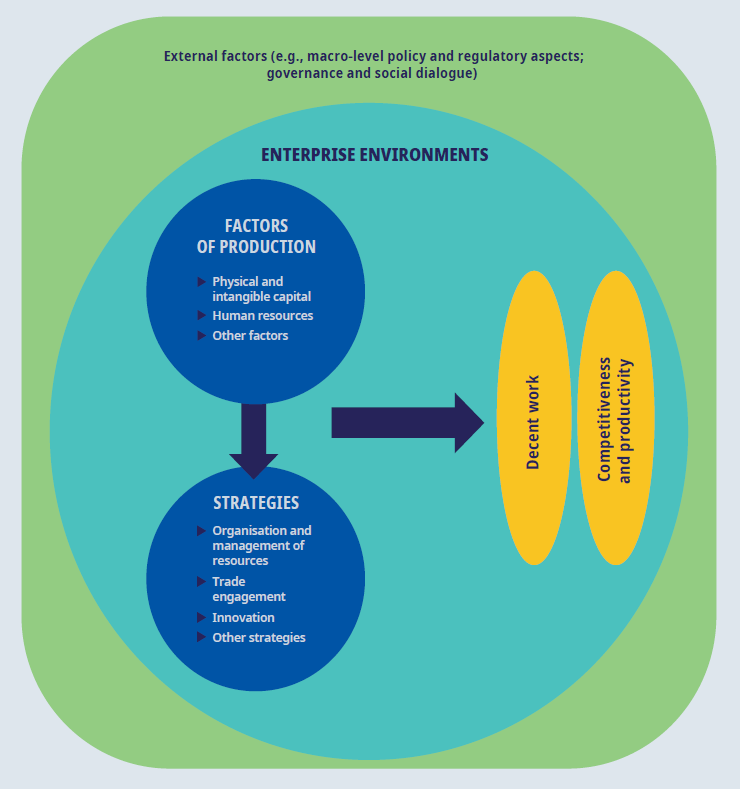
Figure 4.1 Shaping enterprise behaviour: A framework of internal and external factors3
4.1 How can PES best organise their internal resources to work with enterprises?
It is important that PES have separate resources for working with enterprises so that PES staff can develop personal connections, build trust and deliver results that meet enterprises’ expectations. Depending on the size of the PES, this can either be a dedicated unit (team of people) or individuals that are specifically assigned to work with enterprises. This means that these types of PES staff arelikely to require a slightly diff erent skill set than front line counsellors and will have a different type of workload. This section will provide further details on some of key aspects of their work and the specific skills that these staff should have.
Box 12. Central offices or teams responsible for enterprise engagement
In many countries across Europe, PES have established a central office or team responsible for
coordinating and supervising PES’ enterprise engagement. The tasks of this unit can include:
- Designing enterprise services and service standards;
- Determining division of responsibilities and safeguarding cooperation among all units concerned with enterprise engagement;
- Providing advice in special situations;
- Developing and maintaining common tools (e.g., IT tools, contract templates);
- Developing and producing PR and communication materials, branding;
- Monitoring engagement activities and outcomes;
- Coordinating mutual learning and exchange; and
- Advising senior PES leaders on enterprise engagement issues.4
4.1.1 What is the importance of personal contact?
PES in the region as well as across Europe confirm that personal contact is an important aspect of working with enterprises. This is important to establish and develop a working relationship, boosting the PES’ reputation and gradually overcoming any negative perceptions enterprises may have about the PES. An important element for enterprises is to have a single contact point within the PES whom they can contact when they would like to discuss their vacancy needs, skill requirements and any growth or down-sizing plans. In some PES, larger enterprises are provided with a specific account manager5 within a national headquarter PES office, or it could be within a local PES office for larger enterprises working within specific regions. This means that the enterprise can assign a person within their own human resources (HR) department to work specifically with PES unit or contact point. Overall, this makes the communication between PES and large enterprises far more efficient, direct and standardised for both parties. Moreover, assignment of a key account manager can help the PES to develop specific knowledge of the business, and sector, and thereby better anticipate the enterprise’s future needs.
In contrast, SMEs also prefer an individual contact point at the PES as this person can develop a full understanding of the enterprise and the challenges they are facing. Often SMEs have constraints around recruitment-related activities so in these instances PES can offer a greater advisory role around vacancies as well as wider skills needs59. In such instances, PES may wish to visit SMEs at their premises. This is because SMEs may not have the time to visit PES offices themselves and, depending on the sector and location, they may have some barriers in terms of online access (if a dedicated enterprise page is available on the PES website). This provides PES with an opportunity to develop deep insights into enterprises’ recruitment needs, understand the issues that they are facing and gain valuable knowledge in terms of working conditions, worker’ expectations and the wider sector.
Any meetings or events that are organised by PES for enterprises should consider the specific needs and availability of enterprise. For example, PES could look at holding ‘breakfast’ meetings or working with ‘umbrella’ organisations such as chambers of commerce to attend events where enterprises will already be in attendance.
Case Study 8. Ireland: Ballymun Youth Guarantee Pilot Project: tailored approach for working with enterprises
The Ballymun Youth Guarantee Pilot Project tested the Youth Guarantee approach to address high rates of youth unemployment in an area of Dublin. The project aimed to provide young people under the age of 30 with a good quality offer of a job, apprenticeship, traineeship, work experience or continued education within four months of registering at the PES.
The project, led by the Irish PES, took a proactive, personal approach to engaging with enterprises with communication methods closely tailored to the needs of enterprises. Dedicated Enterprise Engagement Officers from the PES telephoned enterprises to explain ‘what’s in it for them’ and this was followed up with face-to-face meetings at enterprise premises. PES officers provided an overview of support available to enterprises for hiring young people, as well as outlining a ‘menu of options’ of possible ways to get involved. The PES officers highlighted that any contribution from an enterprise was welcome, ranging from a talk at a job club to providing a work experience placement. In addition, meetings and events were organised at times that suited enterprises, including organising breakfast briefings.
4.1.2 What do PES staff need to deal with employer and business membership organisations?
Establishing, building personal contact and dealing with enterprises take time and staff working with enterprises should be provided with dedicated time to deal with enterprises. This means that relevant PES staff should not be involved in other aspects of PES work, or this should be kept to a minimum. This division of work will allow PES the time and resources to make an important investment in delivering high-quality services to enterprises and provide PES staff with an opportunity to work with enterprises to develop quality, sustainable vacancies.
The time required to deal with diff erent types of enterprises will vary according to their size. Larger enterprises are less likely to require intensive support from PES regarding vacancies and future recruitment needs as they are more likely to have internal recruitment strategies in place as well as dedicated internal human resource departments. They are therefore more likely to be ‘self-sufficient’ and contact PES on an ‘as needs’ basis, particularly if they can automatically upload vacancies directly on an online job portal.
In contrast, SMEs are likely to require more support as they often do not have human resource departments in place and may be less sure of their recruitment needs and less aware of what services PES can offer. In such cases, dedicated PES staff may need to provide SMEs with much more ‘hand-holding’ throughout the process and this can include developing a job description, posting a vacancy and providing a selection of candidates as well as providing ongoing support around available active labour market policies (where relevant) and the potential need for employees to upskill.
4.1.3 What skills are needed by PES staff who work with enterprises?
PES staff who are working with enterprises need to have some specific competences, which diff er to those staff who are mostly working with jobseekers. This is so that staff are best placed to provide appropriate services and support and PES resources can be efficiently used when engaging with enterprises.
The table below outlines the key competences and behavioural indicators, developed by the European Commission, which may be a useful source of inspiration and information for PES in the region when thinking about the skill set of staff working with enterprises.
European Commission (2014) ‘European reference competence profile for PES and EURES counsellors’
4.2 How can PES receive and post vacancies from enterprises?
Receiving and posting vacancies from enterprises is a core role of PES in the facilitation of the matching process. The method and approach to do this can vary according to the PES services as well as the needs and size of an enterprise.
The sections below outline diff erent approaches to helping enterprises to develop job descriptions (in scenarios where this level of support is needed), as well as receiving and posting vacancies.
4.2.1 What support can PES provide to enterprises to develop job descriptions and establish working conditions?
An important step in creating vacancies is crafting well-written job descriptions. This will help to ensure that vacancies are suitable and help to develop decent work opportunities for all. The level of support required by diff erent enterprises varies depending on their size, available resources and experience of developing job descriptions. For example, SMEs may need help to develop an appropriate and well-developed job descriptions that accurately refl ect the expected worker’s duties, responsibilities and expectations.
PES have good insights and expertise knowledge of what constitutes a good, well-written job description and this support can be valuable to SMEs who do not have this knowledge. This support can be given on a one-to-one basis via face-to-face meetings as well as via telephone support.
By providing tailored support to enterprises, PES can help to build capacity within enterprise organisations so that they have opportunities to develop their skills and knowledge and are better equipped to produce better job descriptions in the future. Importantly, PES support to SMEs to produce job descriptions can contribute to a more efficient matching process.
An important point to note is that PES can offer SMEs insights into expected working conditions and workers’ rights. This can be important in helping to make sure that the vacancies are fit for publication and that enterprises are fully aware and up to date regarding their expectations and legal requirements.
EMBOs can be a useful partner for PES to communication information about expected working conditions to a large group of companies quickly and efficiently. This can help to inform smaller companies about any national, regional or local requirements and relevant expectations. For example, PES could attend EMBOs’ meetings or events to inform groups of existing and new requirements. PES can also use such opportunities to promote their services on supporting enterprises to develop job descriptions. By taking part in such activities, PES help to establish and build up working relationships with specific companies.
4.2.2 How can PES encourage enterprises to upload and post vacancies manually and automatically?
The uploading of vacancies onto an online portal is an important step towards the publication of jobs. This can be done in diff erent ways, and this can depend on the enterprise’s size and available resources as well as their access to online services.
4.2.2.1 Manual uploading and posting of vacancies by PES staff may be suited in specific contexts
In some cases, PES may suggest to enterprises that they can send in their vacancies by email instead of automatically uploading these jobs to the online portal. This may be most suited to SMEs who require additional support as they do not have the resources to do this or where they may have limited or unreliable access to the Internet.
This can be more resource intensive for PES however it provides PES with an opportunity to have a good overview of what types of jobs (and at what levels) are available, providing insights into the expected roles and responsibilities of workers and it allows PES to undertake some important quality checks on the information that is added to an online portal. It may also help to encourage smaller enterprises to use PES services in the future, based on the quality of customer service that they receive as well as the quality and relevance of referred jobseekers.
4.2.2.2 PES can support the automatic uploading and posting vacancies by some enterprises
Automatic uploading of vacancies directly onto online vacancy databases can be promoted to certain types of enterprises, such as large enterprises. These types of enterprises often have greater capacity and expertise to develop adequate information for vacancies and may be more confident to do this.
In addition, it may be worth noting that online tools can be particularly useful for large companies given that they tend to have greater numbers and/or more regular fl ows of vacancies to advertise. They also give companies – and their human resource departments – a certain degree of autonomy in the recruitment process, meaning that PES staff can focus their face-to-face contact and resources on other (often smaller) enterprises.[1] In addition, it may mean that vacancies are uploaded onto an online vacancy database much quicker and at any time as PES are not required to intervene in this process.
The automatic uploading and posting of vacancies require appropriate IT systems and infrastructures to be in place. It can also require information to be uploaded in a standardised way so that there can be commonalities in terms of file formats, data categories and key words. This can help in jobseekers finding vacancies online as well as providing PES with possible data that can be exported and analysed in terms of emerging labour market trends and possible skills gaps between the types of vacancies upload against the skills of jobseekers. This information is used to update training and career counselling in line with the current labour market needs, ensuring that jobseekers have the latest information about enterprise needs and are referred to training that can put them in a good position when applying for a vacancy.
4.2.3 How can PES manage the quality of vacancies and working conditions?
It is worth noting that it is important for PES to have control over the quality of available vacancies, whether posted online or not, and the types of working conditions that enterprises want employees to work in. According to the ILO Centenary Declaration:[2]
“All workers should enjoy adequate protection in accordance with the Decent Work Agenda, taking into account:
- Respect for their fundamental rights;
- An adequate minimum wage, statutory or negotiated;
- Maximum limits on working time; and
- Safety and health at work.”
Therefore, PES have an important role in filtering vacancies that do not take account or meet the areas highlighted above. By managing the quality of vacancies, PES can help to raise the quality and help to increase work that can be considered decent and sustainable.
4.3 What is the role of PES in managing labour market mismatches?
What happens when there is a mismatch between available skills and the needs of enterprises in a local, regional or national context? PES can have an important role in managing such mismatches in the labour market. This means that they can move from being reactive, and only enterprises reaching out to them when needed, to proactively working with enterprises to identify their future skills needs and working with them to anticipate future needs and what this subsequently means for PES’ services for enterprises. By taking a more proactive approach, PES can help to maximise skill sets by upskilling workers and jobseekers in line with enterprises’ needs, and thus easing transitions within the labour market and contributing to a low or lower unemployment rate.
Box 13. Skills mismatches: The ILO definition[1]
Mismatch may be measured by assessing either types of skills or overall skills possessed and required for competent performance on the job, by the person in employment.
Mismatch by type of skills: A person in employment is considered as over-skilled if they assess that the level of specific type of skills required to perform their job are lower than the level of skills they possess and under-skilled if the level of specific type of skills required to perform their job are higher than the level of skills they possess. The type of skills assessed include but may not be restricted to: (a) job‐specific/technical skills, (b) basic skills, (c)
11.-
- transferable skills.
- Mismatch of overall skills: A person in employment is considered as over-skilled if they report having the skills to perform more complex tasks or under-skilled if they report that, to competently perform their job, some of their skills need to be further developed.
-
This section will outline how PES can carve out a role in terms of supporting sustainable enterprises in case of labour market mismatches.
1.
11.
- Working with enterprises in case of redundancies
PES across the world are increasingly seeking ways to work together with enterprises before or when redundancies are announced. This can help enterprises to look at which skill sets they are able to retain within the company and PES can advise individual employees regarding potential relocation to other enterprises in the same locality, or if there are opportunities to take part in ALMPs where they can be upskilled or reskilled. PES can also advise enterprises as to available resources that they can access. This proactive approach can help to reduce the time of unemployment for individuals as well as providing enterprises with support.
PES need to have some arrangements in place, or at least to consider, the level of contact and cooperation with enterprise organisations and individual enterprises. This helps to identify at-risk employees who could benefit of training or re-deployment to other enterprises as PES can use their networks to find out which enterprises are likely to make redundancies.
1.
11.
- Working with enterprises to upskill or to reskill workers within an organisation
Enterprises and sectors are likely to experience changes in demands and emerging trends in terms of focus on their work and the necessary skills required by their workforce. PES can have an important role in advising enterprises in offering support and access to programmes that can help enterprises to maximise the potential of their workforce, so that it is more appropriate to the specific needs of the business. By doing this, PES can demonstrate to enterprises that they are not just providers of a matching service but are a wider labour market experts.
To do this, PES can provide enterprises with information about available resources and programmes that they can access to upskill or reskill staff according to emerging new needs. They can also highlight to enterprises other programmes and support that may be available outside of the PES, for example, provision of further education and training that is provided by organisations external to PES. This does rely on the PES having extensive networks and a good knowledge of available training that is relevant to the specific needs of an enterprise, or sector. It also helps if there are a network of training providers in place that can provide a range of suitable training.[1]
This type of approach can help workers to adapt to new challenges faced by the future world of work and it can help enterprises to make informed decisions about their workforce in terms of future learning and development opportunities.
It is also worth highlighting that this is an evolving picture as it is likely that going forward most, if not all, companies will be infl uenced by skilled workers across the globe and their workforce may be made up of diff erent nationalities. Workers are increasingly likely to work more in complex teams and therefore the (soft and technical) skills that they will need in future will continue to evolve. Specialised training and internship opportunities, including training in non-traditional fields, may help to upskill and reskill workers and break down any perceived barriers and make certain sectors, such as manufacturing and production lines, more gender-inclusive.[2]
4.4 What is the value of working strategically with enterprises?
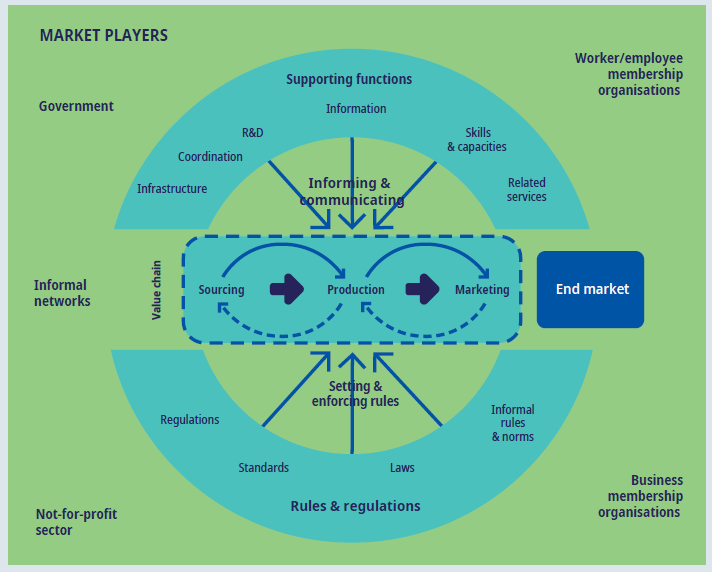
Working with enterprises should be considered as a long-term, strategic activity and not a ‘one off ’ transaction to match vacancies. Instead, working with enterprises should be done with a view of creating long-lasting relationships between PES and enterprises. A strategic approach is considering the enterprises as part of larger value chain embedded in a market system.
The concept of value chains is a good starting point to understand how diff erent activities are involved in developing activities from an initial start point to delivery.[3] This can include:
- Design;
- Production;
- Marketing and communication activities;
- Distribution;
- Support services; and
- Roll out and implementation with consumers (e.g., enterprises, jobseekers).
Value chains are part of much wider market systems, where different actors provide support activities to enterprises and other organisations which reinforce behaviours and activities around how organisations involved in value chains operate.
PES can then gather information and knowledge about a particular enterprise, and sectors, over time and use this to design more efficient and eff ective services for enterprises, tailoring information as and where needed and providing enterprises with potential solutions to anticipated challenges. This section will provide information on initiatives to understand and collect local labour market information (including skills audits); regional and economic sector-based analysis; enterprise surveys; and wider communication with enterprises that can build trust and overcome any negative perceptions.
Figure 4.2 Market players6
4.4.1 What is the value chain for decent work?
Decent work refers to opportunities for work that are:
- Productivity and a fair income;
- Provide security in the workplace and social protection for workers and their families;
- Offer better prospects for personal development and encourage social integration;
- Give people the freedom to express their concerns;
- To organise and to participate in decisions that aff ect their lives; and
- Guarantee equal opportunities and equal treatment for all.[1]
This applies to all countries and all types of employment, no matter what the level of economic development is.
- Box 14. ILO Declaration on Fundamental Principles and Rights at Work (1998)[1]
This states that four fundamental principles and rights at work are universal and apply to all workers in all countries, no matter what level of economic development. These are:
1.
- Freedom of association and the eff ective recognition of the right to collective bargaining
- The elimination of forced or compulsory labour
- The abolition of child labour
[1] https://www.ilo.org/wcmsp5/groups/public/---ed_norm/---declaration/documents/normativeinstrument/wcms_716594.pdf
[1] Adapted by ILO (2016) ‘Value chain development for decent work: How to create employment and improve working conditions in targeted sectors’ (https://www.ilo.org/wcmsp5/groups/public/---ed_emp/---emp_ent/---ifp_seed/documents/ instructionalmaterial/wcms_434363.pdf)
[1] European Commission (2019) ‘How do PES act to prevent unemployment in a changing world of work?’ (https://ec.europa.eu/ social/BlobServlet?docId=20600&langId=en)
[2] ILO and International Organisation of Employers (2019) ‘Changing business and opportunities for employers’ and business organisations’ (https://www.ilo.org/wcmsp5/groups/public/---ed_dialogue/---act_emp/documents/publication/wcms_679582. pdf)
[3] ILO (2016) ‘Value chain development for decent work: How to create employment and improve working conditions in targeted sectors’ (https://www.ilo.org/wcmsp5/groups/public/---ed_emp/---emp_ent/---ifp_seed/documents/instructionalmaterial/ wcms_434363.pdf)
[1] ILO (2018) ‘Guidelines concerning measurement of qualifications and skills mismatches of persons in employment’ (https:// www.ilo.org/wcmsp5/groups/public/---dgreports/---stat/documents/meetingdocument/wcms_648557.pdf)
[1] European Commission (2014) ‘Targeted services for employers’ (https://ec.europa.eu/social/BlobServlet?docId= 14083&langId=en)
[2] ILO Centenary Declaration for the Future of Work (2019) (https://www.ilo.org/global/about-the-ilo/mission-and-objectives/ centenary-declaration/lang--en/index.htm)
- ^ https://www.ilo.org/actemp/lang--en/index.htm
- ^ ILO and International Organisation of Employers (2019) ‘Changing business and opportunities for employers’ and business organisations’ (https://www.ilo.org/wcmsp5/groups/public/---ed_dialogue/---act_emp/documents/publication/wcms_679582.pdf)
- ^ ILO (2017) ‘World Employment and Social Outlook 2017: Sustainable enterprises and jobs: Formal enterprises and decent work’ (https://www.ilo.org/wcmsp5/groups/public/---dgreports/---dcomm/---publ/documents/publication/wcms_579893.pdf)
- ^ European Commission (2018) ‘Engaging with and improving services to employers’ (https://ec.europa.eu/social/BlobServlet?docId=19735&langId=en)
- ^ European Commission (2014) ‘Targeted services for employers’ (https://ec.europa.eu/social/BlobServlet?docId=14083&langId=en) 59 Ibid.
- ^ Adapted by ILO (2016) ‘Value chain development for decent work: How to create employment and improve working
conditions in targeted sectors’ (https://www.ilo.org/wcmsp5/groups/public/---ed_emp/---emp_ent/---ifp_seed/documents/instructionalmaterial/wcms_434363.pdf)